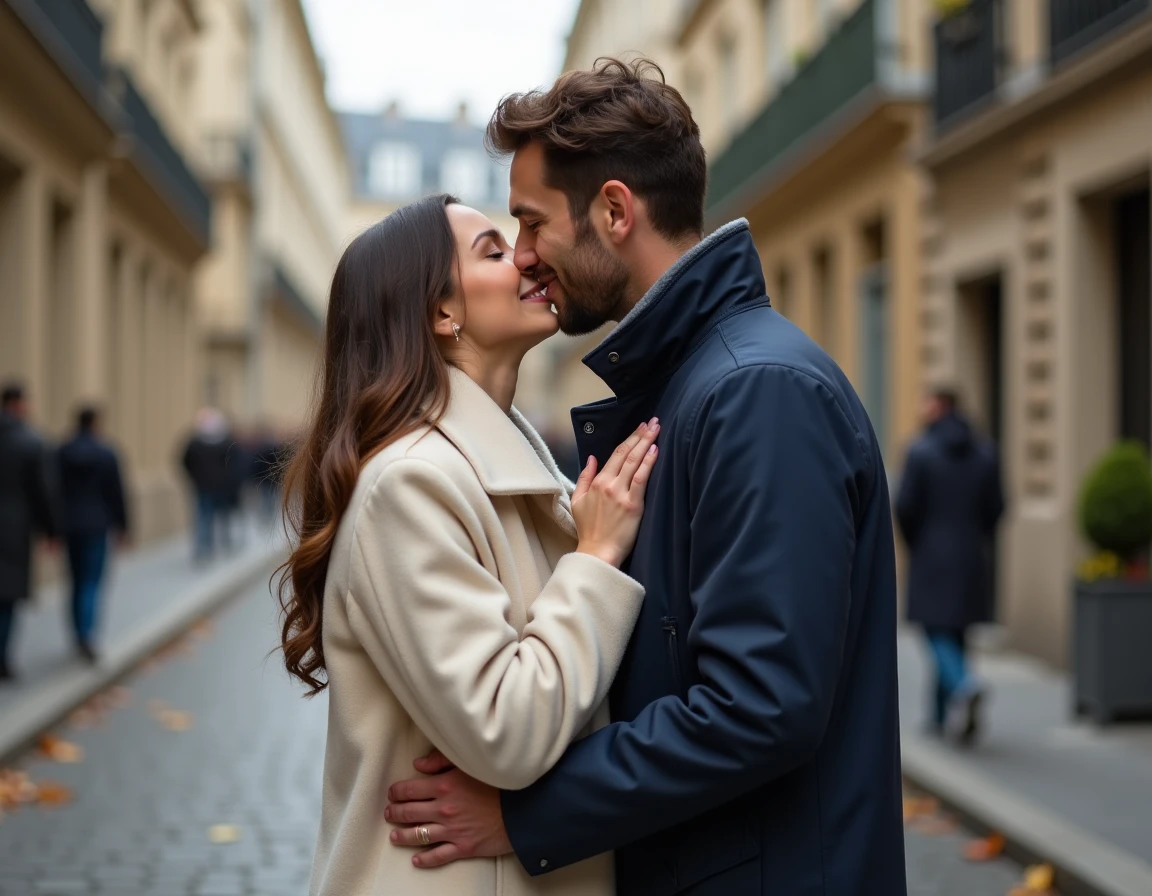
A kiss can last two seconds or stretch out for no apparent reason. The difference between the two lies not in the duration, but in what the rest of the body does while the lips touch. The signs that prove a man in love kisses differently are less visible on the mouth than in the posture, the breath, and the way the kiss evolves over the months.
Body Synchronization During the Kiss: The Marker That Technique Cannot Replicate

A documented phenomenon in psychology, called interpersonal synchronization, distinguishes kisses between emotionally attached couples from those that stem from mere physical attraction. In a man in love, the breathing rhythm tends to align with that of his partner, his hands accompany the movement instead of remaining still, and his posture adjusts to reduce the space between the two bodies.
This alignment is not consciously controlled. A man who kisses out of habit or technique maintains his own tempo. His gestures remain mechanical, replicable from one person to another. In contrast, the overall synchronization of the body (breathing, hand pressure, head tilt) appears spontaneously when emotional involvement is genuine.
To better understand how a man in love kisses, this synchronization criterion remains the most reliable, as it escapes conscious control.
Love Kiss or Habitual Kiss: What the Body Reveals
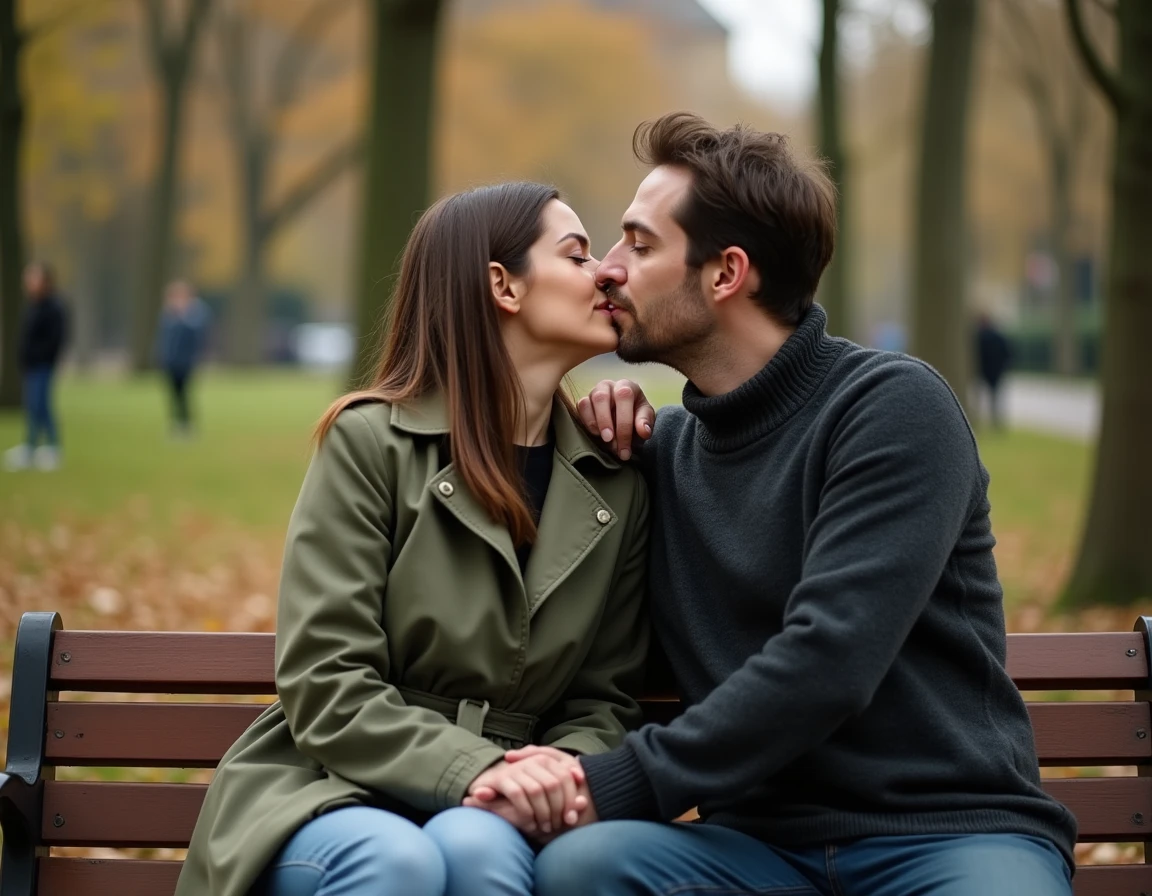
The most common confusion does not lie between a cold kiss and a passionate kiss. It lies between a habitual kiss, that of a settled couple, and a kiss that still carries an emotional charge. The two may appear identical on the surface.
| Observable Criterion | Habitual Kiss | Love Kiss |
|---|---|---|
| Rhythm | Fast, completed in a few seconds | Slower, with spontaneous pauses |
| Hand Contact | Absent or placed mechanically (shoulder, arm) | Hands seeking the face, neck, back |
| Gaze Before or After | Gaze already elsewhere (phone, activity) | Maintained eye contact just before or just after |
| Breathing | Unchanged | Slowing down or synchronizing with the partner |
| Adaptation Over Time | Identical gesture, repeated without variation | Gradual adjustment to the other’s preferences |
This table highlights a often overlooked point: the slowness of the kiss is not restraint, it is a sign of attachment. Research in affective neuroscience shows that in emotionally attached men, kisses are accompanied by a more pronounced decrease in cortisol and an increase in oxytocin, which translates into more enveloping gestures and a naturally slowed rhythm.
Adapting the Kiss to the Partner’s Feedback: The Least Visible and Most Reliable Sign
Recent sexology guides point out a criterion rarely addressed in mainstream articles. A man in love spontaneously adapts his way of kissing to his partner’s feedback: lip pressure, use of the tongue, rhythm, favored areas. This adaptation occurs over several weeks or months, not in a single kiss.
A self-centered man, even technically skilled, changes little in his way of kissing despite received signals. His kiss remains the same with this partner as with the previous one. The absence of variation does not indicate a lack of desire, but a lower emotional investment in the relationship.
What Distinguishes Loving Adaptation from Simple Technique
- Loving adaptation is gradual and not calculated: it results from attention to the other’s reactions, not from a conscious effort to “kiss well”
- It also concerns non-sexual moments: the morning kiss, the one before leaving, the one without a particular reason
- It manifests in details that no one verbalizes: slowing down when the partner slows down, avoiding an area that caused a retreat, returning to a gesture that prompted closeness
This process of mutual adjustment functions as an indicator of bodily listening. When it is absent over time, the technical quality of the kiss does not compensate for the lack of connection.
Cortisol, Oxytocin, and the Kiss: What Hormones Change Concretely
The link between love and the chemistry of kissing is not merely metaphorical. In an emotionally attached man, the kiss triggers a measurable hormonal response: a decrease in cortisol and an increase in oxytocin. These two combined variations produce observable behaviors without medical equipment.
The decrease in cortisol translates into visible muscle relaxation: shoulders drop, jaw relaxes, the kiss carries no tension. The increase in oxytocin promotes enveloping gestures, those arms that wrap around instead of just resting, that forehead that remains pressed for a few seconds after the lips have parted.
In contrast, a kiss motivated primarily by physical desire activates more dopamine and testosterone, resulting in a more intense but less enveloping kiss. Intensity is not a sign of love, it is a sign of desire. The distinction between the two is evident in what happens immediately afterward: a man in love does not pull away immediately.
Post-Kiss Gestures as Revealers
- Maintaining physical contact after the kiss (hand on the cheek, forehead against forehead, prolonged gaze)
- Absence of a sudden transition to another activity
- Tendency to initiate a second, softer kiss, like an echo of the first
The kiss itself is not enough to distinguish between romantic chemistry and simple habit. It is the thirty seconds that follow, and the way a man kisses differently in the tenth month compared to the first night, that constitute the most readable signs of a real attachment.