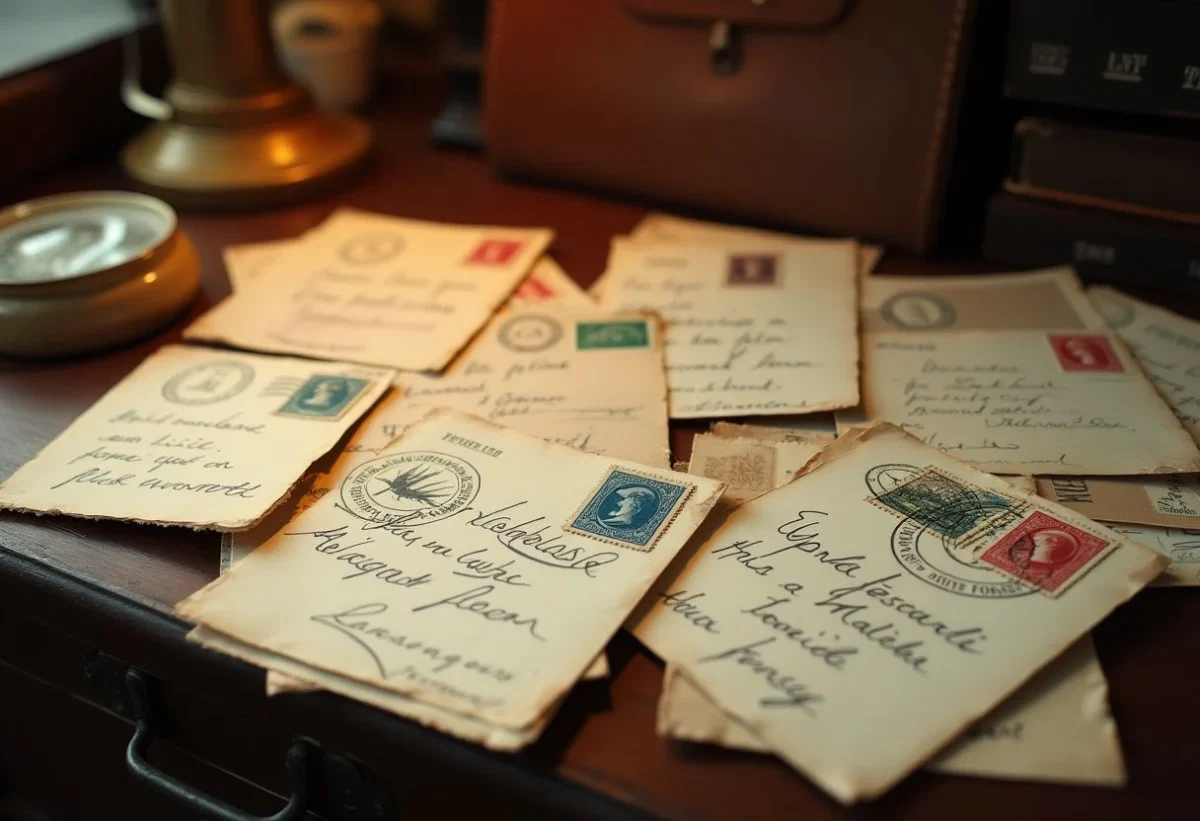
In the digital age, where electronic messages dominate, sending a card remains a timeless and precious act of communication. This simple piece of paper can transport its recipient into a whirlwind of emotions and memories. Nothing replaces the thrill of receiving a tangible message, carefully chosen and handwritten, that reflects sincere attention and affection. The tradition of sending cards endures thanks to its unique ability to forge connections that transcend time and distance. It offers a welcome pause in our often chaotic daily lives, inviting us to savor the moment and celebrate both the small and large occasions of life.
The Historical Origins of the Greeting Card
The history of the greeting card dates back several centuries, shaping our way of communicating through the ages.
This tradition finds its roots in antiquity, where messages were often inscribed on clay tablets. Over the centuries, the evolution of materials and printing techniques led to the emergence of paper cards, which became popular in Europe starting in the 15th century. With the rise of printing, the greeting card experienced a true golden age.
Greeting cards, on the other hand, appeared in the 19th century, quickly becoming a favored means of expressing feelings during holidays and birthdays. Renowned artists began creating illustrations evoking joy and beauty, thereby enhancing the emotional impact of each card sent.
The Greeting Card: An Art of Communication
Sending a card is much more than a simple gesture. It is an art that involves thoughtfulness and creativity.
- Careful selection: Choosing a card that reflects the recipient’s personality and the occasion is essential for creating an authentic connection.
- Personalized text: Writing a handwritten message adds a personal dimension and shows the sender’s involvement.
- Use of space: The limited space on a card requires conciseness and impact, necessitating a true mastery of words.
- Choice of colors and patterns: The visuals of a card can evoke past memories or future aspirations, enriching the written message.
Perfect Occasions to Send a Card
The greeting card naturally finds its way into our lives during significant events, bringing a touch of elegance and warmth.
Birthdays are special moments to remind our loved ones how much they mean to us. A well-chosen card can brighten their day and leave an everlasting memory. Year-end celebrations, on the other hand, are an opportunity to reconnect with those we haven’t seen in a long time, warming hearts despite the distance. Weddings and births also mark important milestones where a card is perfectly suited to congratulate and share joy.
There’s no need to wait for a special occasion to surprise someone with a card. A simple “I’m thinking of you” can turn an ordinary day into an exceptional moment.
Modernity and Tradition: The Greeting Card Today
As the world changes, the greeting card continues to evolve, constantly reinventing itself to remain relevant.
Technology has indeed changed the way we communicate, but it has also offered new possibilities for cards. Today, one can personalize a card online with photos, videos, or audio messages, while still preserving the authenticity of the paper format. Moreover, contemporary artists are competing in creativity to offer innovative designs that appeal to all generations, proving that the card still has a bright future ahead.
Consumers, for their part, are rediscovering the joy of sending and receiving cards, an act that becomes a form of resistance against the immediacy imposed by the digital world.
The greeting card, with its personal and tangible nature, embodies a form of sustainable and respectful communication.