
Tablets and computers have invaded classrooms, radically transforming the way children learn. Access to online resources and educational applications offers opportunities for interactive and personalized learning. Teachers can now use digital tools to tailor lessons to the individual needs of students, making learning more engaging and accessible.
This increased reliance on technology also raises concerns. Experts question the potential impact on children’s concentration and social skills. Can excessive screen use harm cognitive and emotional development? Parents and educators must find a balance between the undeniable benefits of technology and its potentially harmful effects.
The Benefits of Digital Technology on Children’s Learning
The integration of screens in education offers significant advantages. Teachers leverage these tools to diversify and enrich their teaching methods. According to a report from Unesco titled ‘Technologies in Education: Who’s in Charge?’, the growing use of digital technologies presents positive benefits for young learners.
The Strengths of Digital Integration
- Increased Accessibility: Online educational resources allow children to access a multitude of content tailored to their level and interests.
- Personalization of Learning: Digital tools enable lessons to be adjusted according to individual needs, promoting more effective learning.
- Engagement and Motivation: The interactivity of educational applications makes learning more fun and stimulating.
The use of the tablet in schools has also helped reduce educational disparities by providing equal opportunities for all children, regardless of their socio-economic background. Teachers can thus track each student’s progress in real-time, adjusting their teaching strategies accordingly.
Development of Digital Skills
The integration of digital technologies in education prepares children for an increasingly connected world. By mastering technological tools from a young age, they develop valuable skills for their future professional lives. This early exposure to screens and educational software enhances their ability to quickly adapt to technological changes.
The relationship between screens and children is therefore doubly beneficial: on one hand, it enhances classroom learning; on the other hand, it prepares young generations for the challenges of the digital world.
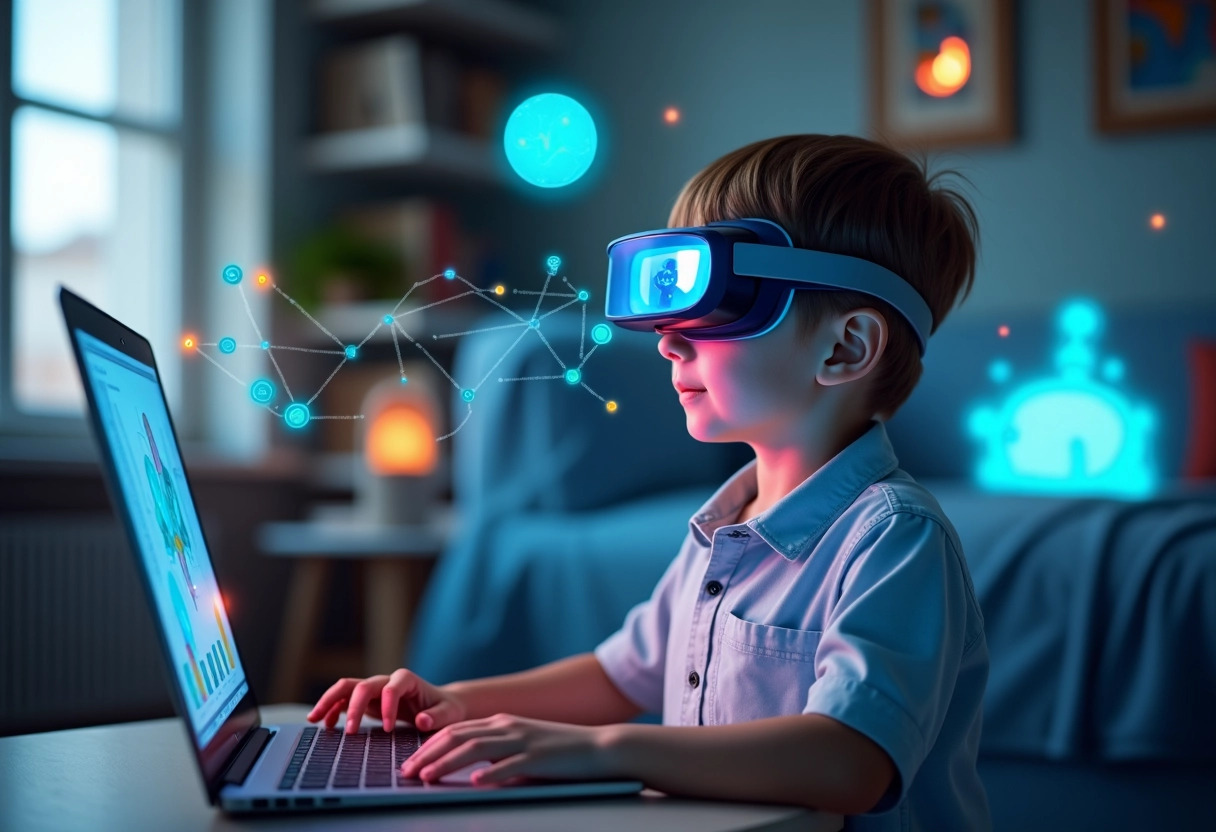
The Challenges and Risks Associated with Children’s Use of Digital Technology
The increased use of screens raises concerns among parents, psychologists, and sociologists. While the benefits are notable, the risks should not be overlooked. Audrey Azoulay, Director-General of Unesco, warns against the potential pitfalls related to excessive exposure to digital technologies.
Identified Main Risks
- Physical and Mental Health Issues: Prolonged use can lead to vision problems, posture issues, and a negative impact on sleep.
- Social Isolation: Immersion in the digital world can reduce real social interactions, which are crucial for children’s social skills development.
- Risks Related to Cyber Addiction: The allure of video games and social media can lead to addiction, compromising academic performance and daily life.
Experts’ Recommendations
Psychologists and sociologists recommend moderate use of digital technologies. They advocate for clear limits and active monitoring by parents. Parents should encourage diverse activities and screen-free interactions to balance children’s development.
| Aspect | Recommendation |
|---|---|
| Screen Time | Limit to 1-2 hours per day |
| Type of Content | Favor educational and interactive content |
| Supervision | Monitor and discuss digital usage |
Vigilance and engagement from parents are essential for healthy and balanced use of digital technologies by children. The Unesco report emphasizes that screens should be educational tools and not substitutes for human interactions and physical activities.