A pool with clear water in the middle of summer relies less on the amount of chemicals added and more on the control of three often misprioritized parameters: the stabilizer level, the filtration duration adjusted to the actual temperature, and the quality of the filter media. We observe each season that owners who neglect one of these three points end up multiplying shock treatments without lasting results.
Cyanuric acid: the forgotten parameter that sabotages disinfection
Free chlorine only disinfects effectively if the stabilizer remains within a reasonable range. With the massive use of stabilized chlorine tablets, cyanuric acid accumulates season after season without ever degrading. Beyond about 70 mg/L, chlorine becomes almost inactive: the water may appear clear while being poorly disinfected, ready to turn green at the first heatwave.
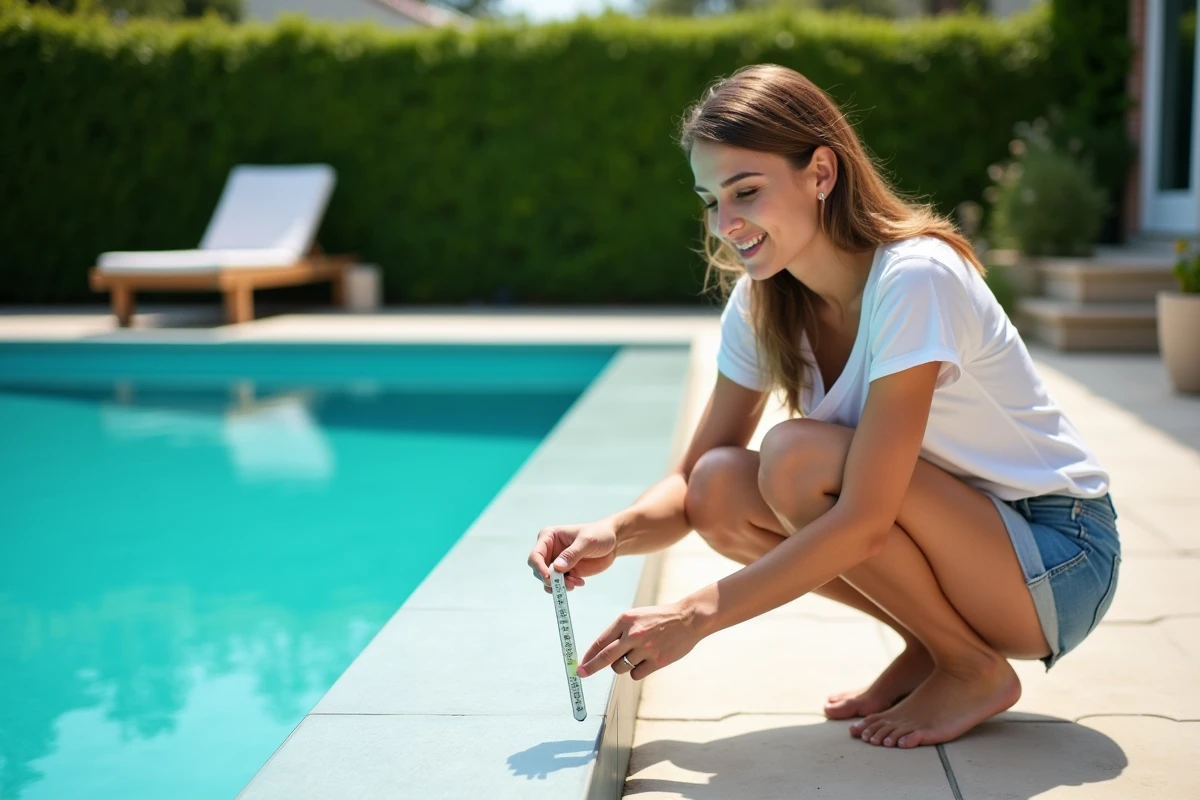
We recommend measuring this parameter at least once per season, ideally at the beginning of summer. Standard test strips are not always sufficient: a dedicated colorimetric test or laboratory analysis provides a reliable reading. If the level exceeds the critical threshold, only a partial draining of the pool can bring it back down, as no common chemical neutralizes cyanuric acid once dissolved.
For those looking to achieve clear pool water over time, monitoring the stabilizer even before pH or chlorine radically changes the game.
Alternatives to stabilized chlorine
Unstabilized chlorine (calcium hypochlorite, diluted bleach) does not add cyanuric acid to the pool. A saltwater chlorinator also produces chlorine without stabilizer. Both options, however, require a controlled addition of external stabilizer, dosed according to solar exposure, which offers much finer control than all-in-one tablets.
Filtration and water temperature: adapting duration in real-time
The basic rule is well known: divide the water temperature by two to obtain the daily filtration duration in hours. At 26 °C, thirteen hours of pump operation. This rule works under normal conditions but becomes insufficient during heatwaves that we are observing more frequently.
When the pool temperature exceeds 30 °C, the proliferation of algae and bacteria accelerates exponentially. Continuous filtration during heat peaks is not a luxury: it is the only reliable response to prevent the water from turning, which would then require an expensive shock treatment in terms of products and time.
Optimizing filtration time slots
Running the pump during the hottest hours (between 10 a.m. and 6 p.m.) maximizes efficiency. At night, the temperature drops and algae photosynthesis stops. Focusing filtration during the day also helps reduce the electricity bill by avoiding unnecessary nighttime operation, except in the case of prolonged heatwaves where 24/7 operation becomes necessary.
Filter media and filter cleaning: a direct impact on clarity
A sand filter whose media has not been changed for several years gradually loses its ability to retain fine impurities. The sand compacts, clogs, and allows particles to pass through that make the water cloudy even with perfect chemistry. Replacing sand with filter glass improves filtration fineness and reduces the frequency of backwashing.
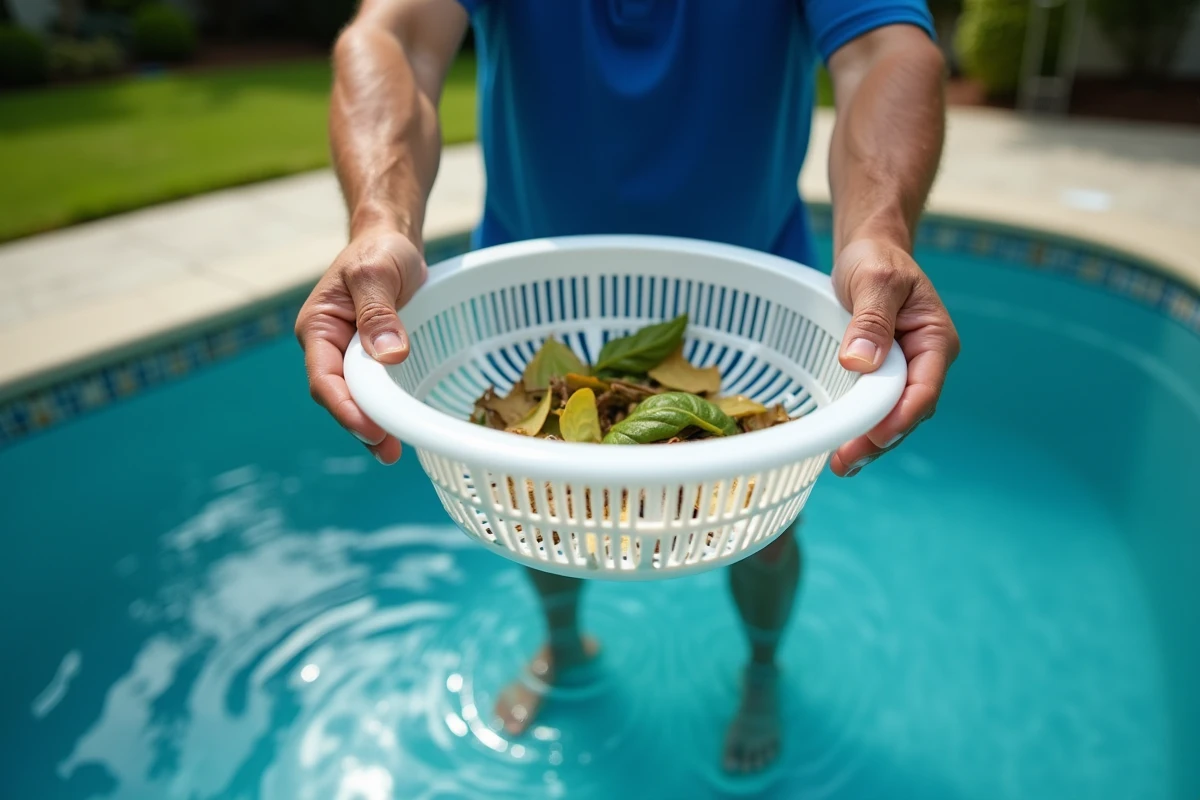
Recycled glass filters smaller particles than standard sand, resulting in visually clearer water. It also resists biological clogging better, a direct advantage when organic load increases in summer with sunscreen, sweat, and plant debris.
Frequency and method of backwashing
An effective backwash lasts long enough for the sight glass water to become clear. We observe that many owners shorten this step to save water, which leaves residues in the filter and degrades filtration quality as soon as it restarts. Points of vigilance:
- Check the pressure on the filter gauge: a backwash is necessary as soon as the pressure exceeds the reference pressure after cleaning by 0.3 to 0.5 bar
- Rinse (in “rinse” position) after each backwash for one to two minutes to avoid sending impurities back to the pool
- Inspect the laterals at the bottom of the filter once a year, as a cracked lateral allows sand or glass to pass directly into the pool
Chemical balance of the pool: pH, chlorine, and alkalinity
The pH conditions everything else. A pH maintained between 7.2 and 7.4 maximizes chlorine efficiency and limits skin irritation. Above 7.6, chlorine’s disinfecting power drops significantly, requiring overdosing for a mediocre result.
Alkalinity (TAC) plays a often underestimated buffering role. If it is too low, pH becomes unstable and fluctuates from day to day. Correcting TAC first before adjusting pH avoids a vicious cycle of ongoing corrections.
Shock treatment: when and how
A shock treatment with unstabilized chlorine is justified in specific cases:
- Water that has turned green or brown despite correct filtration
- After a heavy storm that has brought an unusual organic load
- At the beginning of the season, when restarting the pool after winter
- After intense use (party, many bathers over several days)
Pouring the product in the evening, with continuous filtration for at least twelve hours, allows chlorine to act without being degraded by solar UVs. Do not swim until the chlorine level has returned to the normal range.
The clarity of a pool relies on consistency rather than on reactive interventions. Weekly pH monitoring, seasonal stabilizer checks, and filtration calibrated to the actual pool temperature are sufficient to maintain transparent water all summer long, without multiplying treatment products.