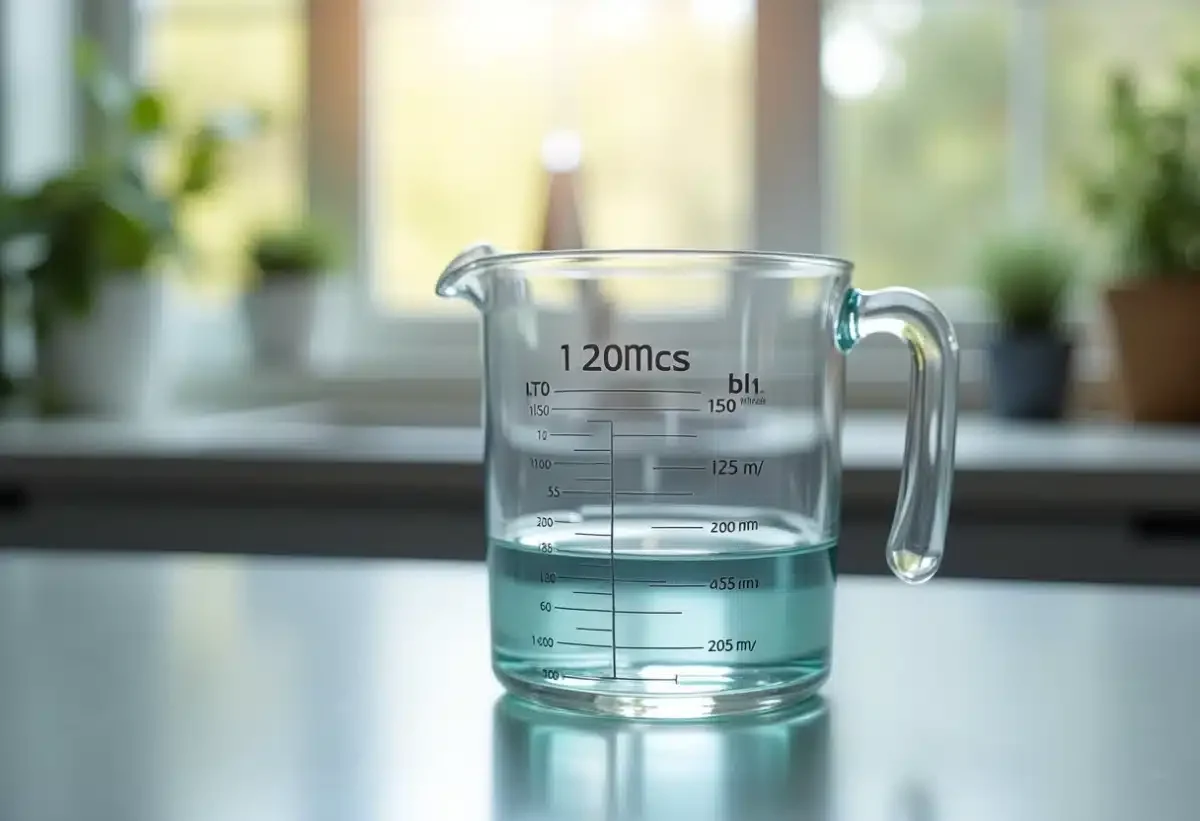
In cooking, a successful recipe often relies on exact proportions. It is not uncommon to encounter measurements in ounces, milliliters, or cups, depending on the origin of the recipe. Understanding how to easily convert these units becomes essential to avoid any missteps.
To simplify these conversions, a few practical tips can make all the difference. For example, remember that 1 cup is approximately 240 milliliters or that 1 fluid ounce corresponds to nearly 30 milliliters. Using mobile apps or conversion charts can also be very helpful for those looking to save time and cook without stress.
Liquid measurement units: understanding the basics
The metric system, widely used in Europe and many other countries, is based on units such as centiliters (cl) and milliliters (ml). Understanding these units is essential for a smooth conversion of liquid measurements.
1 centiliter (cl) equals 10 milliliters (ml). When you have a measurement in milliliters, divide it by 10 to get the volume in centiliters. Conversely, multiply the centiliters by 10 to convert to milliliters. For example, 1/4 liter in cl corresponds to 25 centiliters (250 milliliters).
Common liquids such as water, milk, and oil have specific densities. Water, for example, has a density of 1 gram per milliliter. Milk, slightly denser, has a density of 1.03 grams per centiliter. As for oil, it is less dense at 0.92 grams per centiliter.
- 1 cl of water = 1 gram
- 1 cl of milk = 1.03 grams
- 1 cl of oil = 0.92 grams
These densities are crucial when converting measurements, especially in cooking where precision is key. To convert effectively, use reliable tools like measuring cups, electronic scales, or conversion charts. These instruments will allow you to quickly translate volumes into understandable and usable units.
Techniques and tips for easily converting liquid measurements
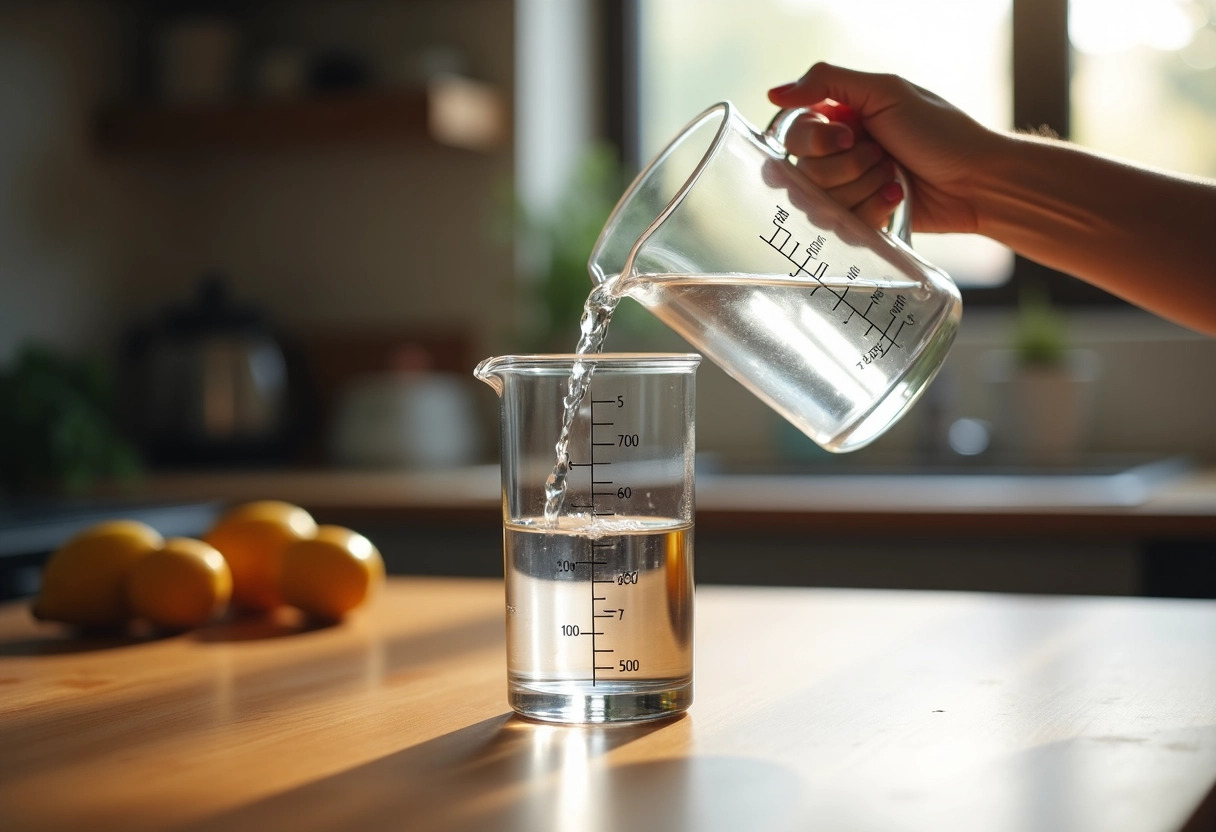
For precise conversion of liquid measurements, use specific tools. Among the essentials, the measuring cup and the electronic scale stand out for their reliability. A measuring cup, marked in milliliters and centiliters, simplifies measurement tasks. The electronic scale, on the other hand, allows you to convert grams to milliliters, taking into account the density of the liquid.
Using spoons
Teaspoons and tablespoons provide practical references for small quantities. A teaspoon equals 5 milliliters (ml), while a tablespoon contains 15 milliliters (ml). These standardized measurements are useful for recipes requiring small amounts of liquid.
Conversion charts
Conversion charts are valuable tools. They allow for quick transformation of volumes into different units. For example, a chart may indicate that 100 milliliters are equivalent to 10 centiliters. These charts often include conversions based on the density of liquids, thus facilitating work in the kitchen.
- 1 teaspoon = 5 ml
- 1 tablespoon = 15 ml
- 100 ml = 10 cl
For even more precise conversions, consider digital applications. They offer instant and reliable calculations, incorporating parameters like density. These technologies effectively complement traditional tools and optimize measurement accuracy.