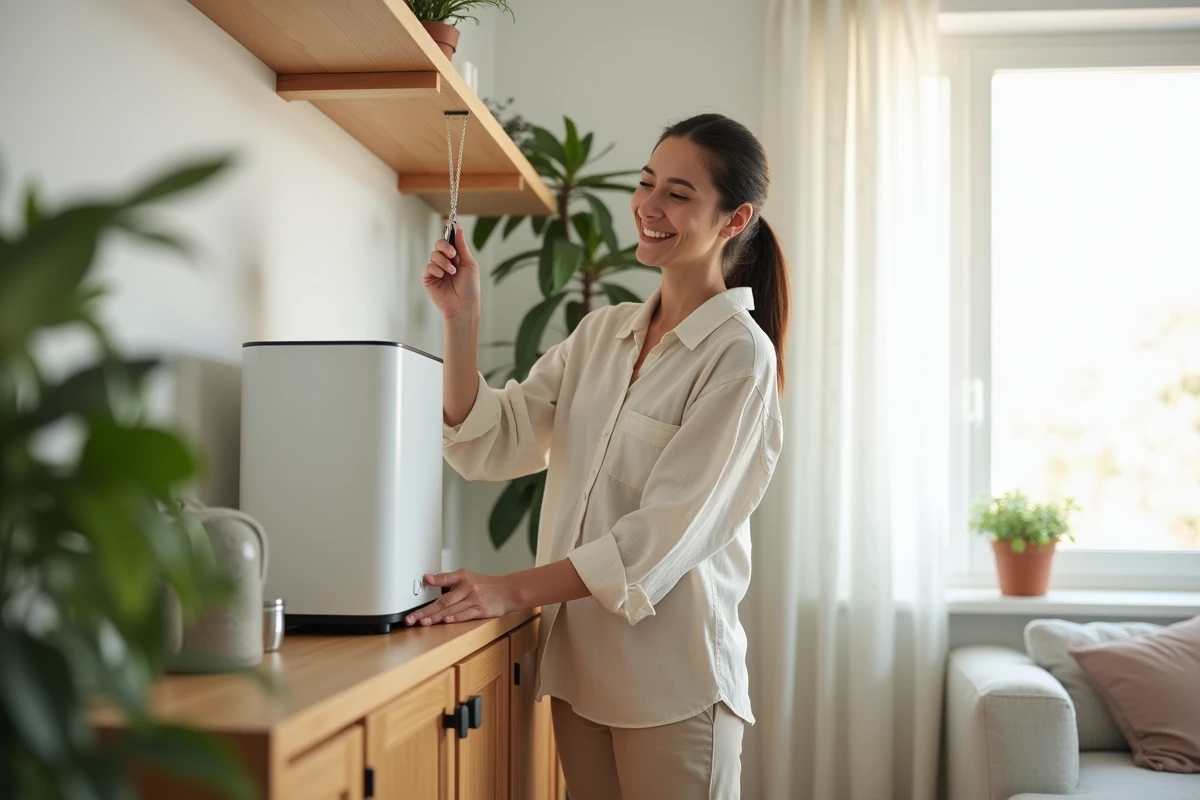
The quality of indoor air encompasses the majority of the issues related to a healthy living environment, well before aesthetics or even raw energy performance. Since the implementation of RE2020, French regulatory requirements explicitly incorporate summer comfort and air quality in new construction, redefining technical priorities for project owners as well as building professionals.
Indoor air quality monitoring: managing ventilation through data
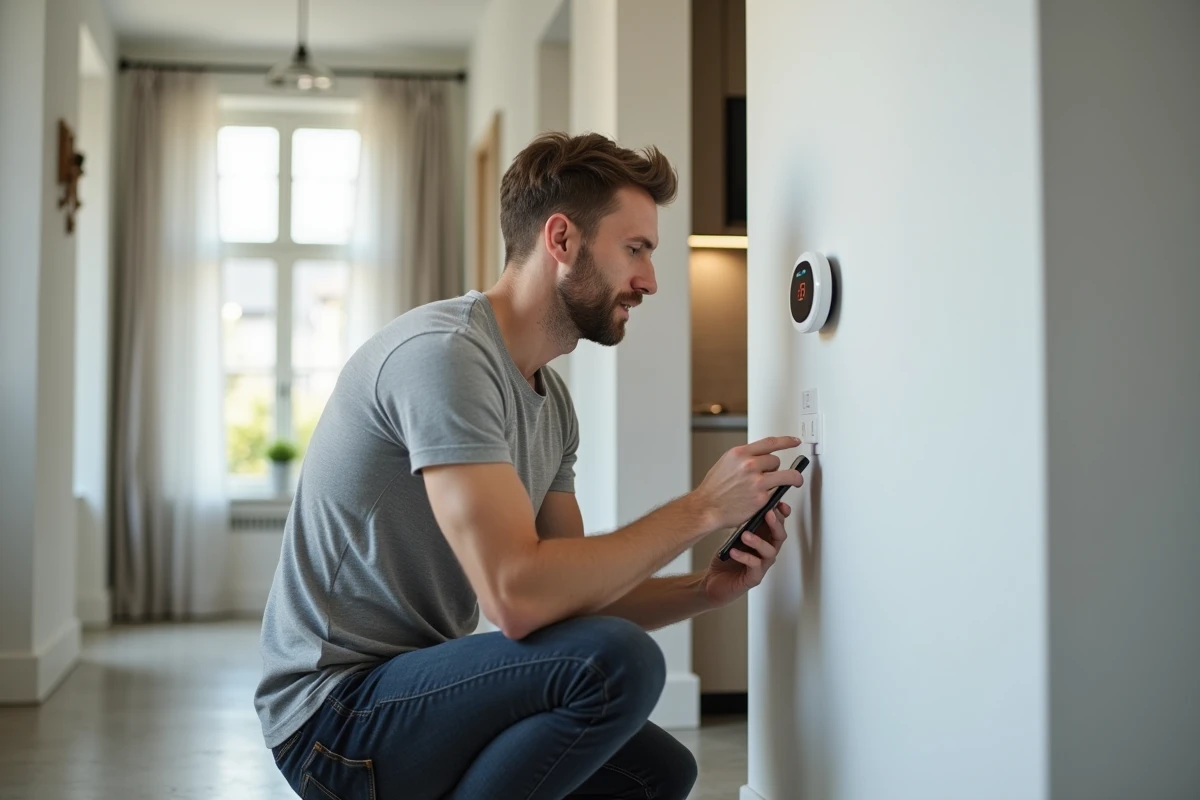
Connected air quality sensors (CO₂, VOCs, fine particles) are no longer reserved for tertiary buildings. We have observed their integration from the design phase in individual homes, particularly in wood and bio-based construction, for several years now.
The principle is simple: sensors automatically control the dual-flow ventilation based on concentrations measured in real-time. The fresh air flow adapts to the actual occupancy of the rooms, which avoids two common pitfalls: over-ventilation (which wastes energy and dries out the air) and under-ventilation (which allows pollutants to accumulate).
To learn everything about noximaison fr and holistic approaches to healthy living environments, this type of data-driven management is a technical lever to consider at the outset of any renovation or construction project.
The HQE-GBC Alliance has also evolved its “Sustainable Building” reference framework by integrating more detailed indicators on VOCs emissions, acoustic performance, and access to natural light. These criteria objectify the concept of a healthy living environment and guide material choices towards certified products.
Bio-based materials and hygrometric regulation: an underestimated health lever
Insulation is not just about thermal resistance. A material that regulates ambient humidity reduces the risk of condensation in walls, limits mold growth, and directly improves the respiratory comfort of occupants.
Industries like Saint-Gobain are now offering “3-in-1” solutions (insulation, hygrometric regulation, acoustic improvement) made from bio-based materials. Respiratory comfort and the reduction of indoor humidity are highlighted alongside thermal performance.
Criteria for selecting a healthy insulation material
- Hygroscopic capacity: the material must absorb and release water vapor without losing its insulating properties. Hemp, wood fiber, and cellulose wadding naturally fulfill this role.
- VOCs emissions: require an A+ rating according to French regulatory labeling. Some synthetic insulations emit volatile organic compounds for several years after installation.
- Carbon footprint of the material: RE2020 mandates consideration of life cycle analysis. A bio-based insulation stores carbon, while a petrochemical insulation emits it during manufacturing.
We recommend cross-referencing these three criteria rather than selecting an insulation solely based on its thermal conductivity. A thermally efficient material that emits VOCs degrades the air quality it is supposed to protect.
Summer comfort and passive solar protections: anticipating without air conditioning
Summer comfort is the neglected aspect of renovation in France. RE2020 has changed the game by imposing a dedicated indicator (DH, degree-hours of discomfort) for new construction, but existing homes remain largely exposed to summer overheating.
Passive solar protections, adjustable sunshades, architectural overhangs, and tilting shutters act upstream of the problem. They block direct radiation before it passes through the glazing, significantly reducing the internal thermal load.
Bioclimatic design: orienting rather than correcting
The orientation of openings remains the most effective and least costly parameter. A south-facing bay window, properly sized and protected by a roof overhang, captures winter sun (low angle) while remaining shaded in summer (high angle).
In renovations, adding external solar protections on west and southwest facades produces measurable results on summer thermal comfort. Treating west facades is a priority, as they receive solar radiation during the hottest hours of the day, when the building’s thermal mass has already accumulated heat.

Dual-flow ventilation and air tightness: the technical duo to master
A very airtight envelope without suitable mechanical ventilation creates a pollutant trap. Conversely, effective ventilation in a leaky building loses all efficiency. The two work in tandem.
Dual-flow ventilation recovers heat from the extracted air to preheat the incoming fresh air. In a healthy habitat, its benefits go beyond energy savings: it filters outdoor air (pollen, fine particles, dust) before supplying it to living spaces.
- The air tightness test (blower door) should be conducted during construction, not just at handover. Correcting an airtightness defect after the installation of finishes is much more expensive.
- The filters in the dual-flow ventilation system require regular replacement. A clogged filter increases pressure loss, reduces airflow, and degrades air quality instead of improving it.
- The duct network must be rigid or semi-rigid. Flexible PVC ducts generate higher pressure losses and are more difficult to clean over time.
A healthy habitat does not rely on a miracle product or a single label. It results from a coherent assembly: low-emission materials, data-driven ventilation, an airtight envelope, and solar protections suited to the building’s orientation. Each technical component interacts with the others, and it is the quality of this interaction that determines the real comfort of the occupants.