
The sum of the three dimensions (length + width + height) is the technical constraint that blocks the most shipments on Mondial Relay, well ahead of weight. A lightweight box of clothes that is poorly folded can be refused at the Point Relais if the total of the sides exceeds the allowed threshold. Mastering this rule avoids refusals at drop-off and buyer disputes on Vinted as well as Leboncoin.
Dimensional Sum Mondial Relay: The Rule That Sellers Ignore
Most casual sellers focus on the weight of the package. The operational reality is different: it’s the sum of length + width + height that causes refusals. A long object, even if lightweight (curtain rod, frame, poster tube), will be systematically rejected if the total of its three dimensions exceeds the ceiling applicable to the chosen price range.
We are seeing an increase in cases of “borderline” packages on second-hand platforms. Foldable, disassembled, or atypical objects do not fit well into standard grids, even though their volume seems modest. The problem often comes from a single disproportionate dimension (length) that causes the total to exceed.
Before packing, measure each side of the final package (not the bare object) and add the three values. If you are close to the limit, reduce the packaging to the strict minimum or change the box. When you master the dimensions for Mondial Relay packages for Vinted and Leboncoin, the risk of refusal at the counter drops to zero.

Mondial Relay Size Grids: Vinted and Leboncoin Do Not Apply the Same Ranges
Both Vinted and Leboncoin use Mondial Relay as a carrier, but the ranges offered to sellers are not identical. Leboncoin has enhanced its offering with a “Mondial Relay at home” mode, which modifies the logistics of delivery and, by extension, the accepted formats.
What Changes on the Leboncoin Side
Home delivery via Mondial Relay on Leboncoin allows for more generous dimensions than delivery at the Point Relais. The courier delivers the package directly to the buyer, which removes the constraint of storage in a locker or on a shelf at the Point Relais. For the seller, this means that a bulky package (small disassembled furniture, sports equipment) can be delivered at home while it would be refused at a relay.
The additional cost of home delivery is a few euros compared to the Point Relais. For an item that is close to the dimensional limits, it is often the safest choice.
What Changes on the Vinted Side
Vinted offers predefined weight ranges when listing items, and the maximum size is linked to the selected range. The seller does not have control over the choice of delivery method (home or relay) in the same way as on Leboncoin. We recommend always checking the range automatically selected by Vinted before validating the listing, as an oversized package will incur additional charges or be refused at drop-off.
Long, Foldable, and Disassembled Items: Adapting Packaging to Field Constraints
The items that cause the most problems are not the heaviest. They are the articles with unusual geometry: skis, umbrella poles, disassembled shelves, musical instruments. Their length pushes the dimensional total upwards, even when width and height remain modest.
- Always disassemble anything that can be. A flat-pack shelf fits in a flat box, an assembled shelf does not.
- For soft items (thick clothing, duvets, coats), compress as much as possible with stretch film before boxing. Every centimeter saved in height counts towards the total.
- Cardboard tubes (posters, prints) are a classic trap: their length often exceeds the limit even if the diameter is small. Consider tighter rolling or a protected fold if the item allows it.
Measure the packaged box, not the bare object: the thickness of the cardboard, bubble wrap, and tape can easily add a few centimeters to each side.
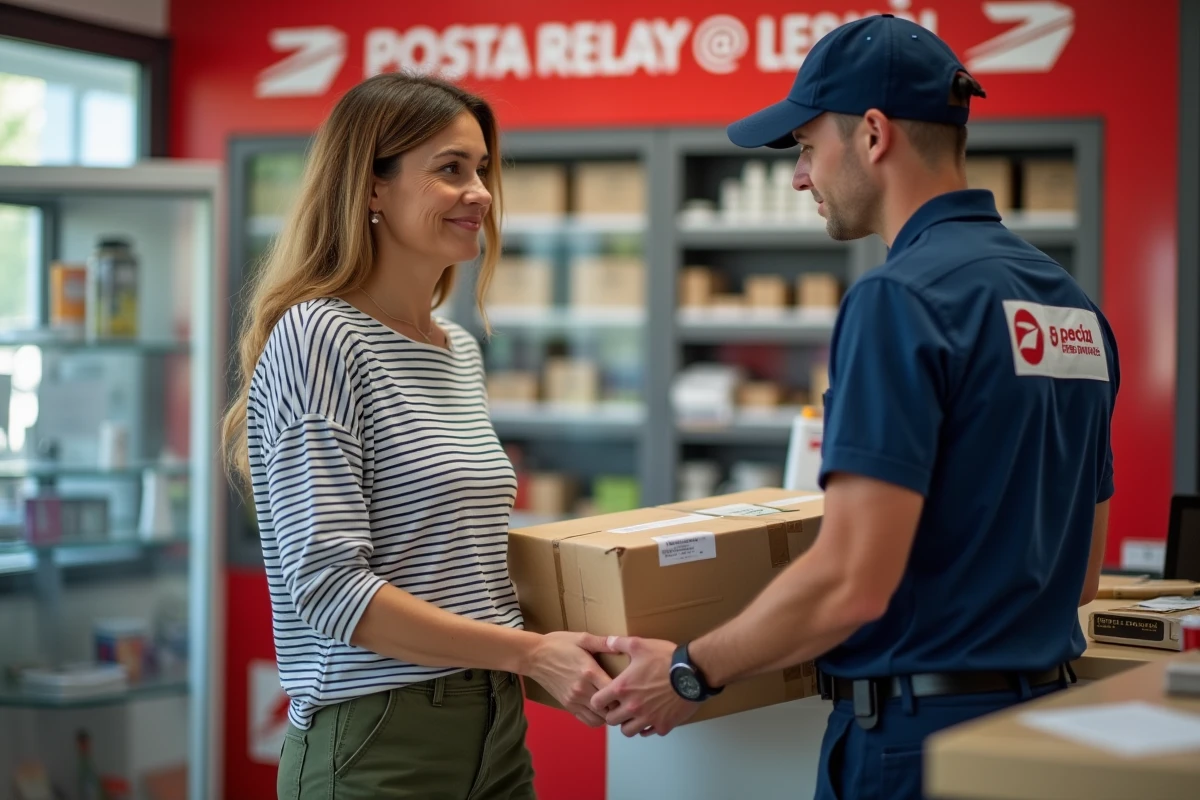
Shipping Without a Printer on Leboncoin: Impact on Package Preparation
The “no printer” angle has gained importance on Leboncoin. Many casual sellers do not have a printer at home, which changes the preparation chain well beyond just the label.
Without a printer, the seller can generate a QR code on their phone and have it scanned directly at the Point Relais. The merchant then prints the label on-site. This procedure works, but it imposes a practical constraint: the package must be ready and closed before arriving at the Point Relais. There is no question of finalizing the packaging at the counter of the tobacconist.
Prepare the package at home, check the dimensions, and close it properly. The visit to the Point Relais is only for scanning and drop-off. Any adjustments on-site (adding bubble wrap, changing boxes) are frowned upon by merchants and slow down the line.
Declared Weight and Actual Weight: Verification at Drop-off
The declared weight when creating the label must match the actual weight of the package. At the Point Relais, weighing is not systematic, but it does exist. If the difference between the declared weight and the observed weight exceeds the tolerance of the range, the package may be refused or surcharged.
- Weigh the packaged box with a kitchen scale or luggage scale. Precision to the gram is not required, but staying within the correct range is.
- On Vinted, the selected weight range determines the delivery price paid by the buyer. Under-declaring the weight to reduce costs exposes you to a transaction block.
- On Leboncoin, the seller chooses the range when creating the label. A range error is corrected before printing, not after.
A well-sized and correctly weighed package passes smoothly at the Point Relais, whether the destination is a relay or a home. Rigorous adherence to these two parameters (dimensional total and declared weight) remains the best way to avoid disputes on both platforms.