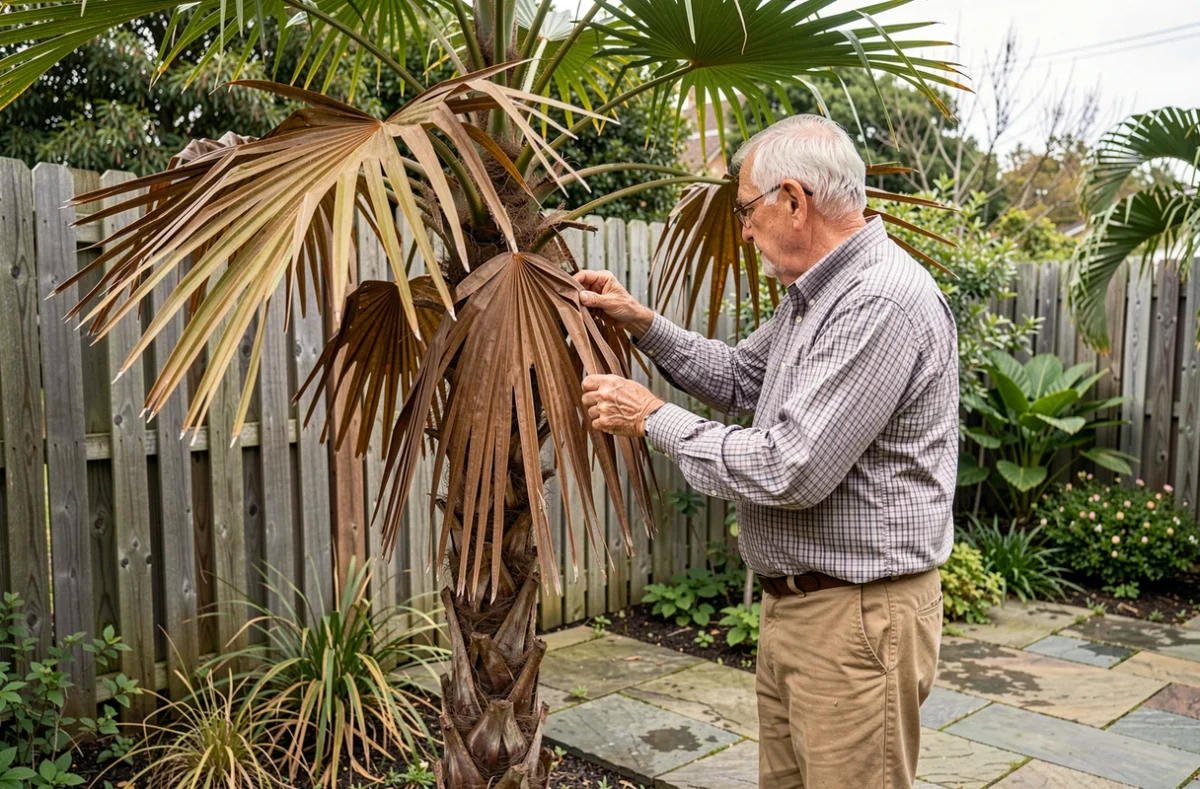
Intrinsically, the decline of a palm tree manifests through macabre symptoms: yellowing leaves, a soft trunk, and abnormal curvature. These manifestations can result from plant etiologies, such as fusarium or bud rot. However, silent signals, more subtle, like slowed growth or a dull color, are often precursors. A vital diagnosis is made by inspecting the crown of the palm: if it is dry or absent, the tree is likely dead. However, a botanical resurrection may be possible with adequate watering, proper sunlight, or the use of antifungals.
Macabre Symptoms: How to Recognize a Dying Palm Tree
The health of a palm tree can deteriorate rapidly without notice. However, there are undeniable alarm signals that suggest a barely living palm tree, or worse, one nearing the end of its life. These macabre symptoms are often the result of disease, pests, or simply the aging of the tree.
It is imperative for anyone owning this type of tropical vegetation in their garden or property, and wishing to preserve their lush beauty and vitality, to be able to recognize these signals before it is too late.
Among the most apparent are the yellowing or even browning leaves that fall prematurely. This phenomenon should not be taken lightly: quite the opposite! It usually reveals a considerable lack of essential nutrients for the proper growth of the palm, such as magnesium and potassium.
Similarly, a lack of water can be decisive for the structural integrity of the trunk itself. The exposed flaccid roots testify to the urgent need for water of your beloved tropical tree.
Generalized decline is also a significant macabre sign. Entire branches may dry out while the trunk begins to show deeply embedded cracks. Moreover, if you see mushrooms appearing on your palm, it is a sign of advanced rot.
Plant Etiology: Common Diseases in Palm Trees
Palm trees, while adding an exotic and aesthetic touch to any landscape, are susceptible to several diseases caused by plant pathogens. At the top of the list is Bayoud, a fungal disease caused by the fungus Fusarium oxysporum. This destructive condition, originating from North Africa, causes progressive wilting and the inevitable death of the palm.
Another pathogen commonly associated with health problems in palms is Phytoplasma. Causing what is known as Deadly Yellowing of the Palm, this microscopic bacterium causes yellowing of the leaves followed by reddish or brown discoloration before the tree completely succumbs to the disease.
Likewise, bacterial infections can also cause significant damage to palm trees. Soft wet rot (caused by Erwinia chrysanthemi) and dry rot (caused by Pseudomonas caryophylli), although less common than the previously mentioned pathologies, can considerably weaken a tree if not treated promptly.
The virus known as Dwarf Palm Yellow Virus (CYPV) can also be a concerning source of morbidity in these trees. It leads to reduced and stunted growth as well as widespread yellowing that gives the palm a discolored and unhealthy appearance.
Silent Signals: Subtle Changes to Watch For
In the vast field of observation and detection, there is a particular category that we tend to overlook: that of discreet signals. These silent changes are often imperceptible, but they can have a major impact on our lives or environments if not properly identified and analyzed. Discreet signals manifest in various formats. They can be physical, like a slight temperature variation, chemical, like the presence of a rarely detectable substance in water, biological, such as an irregular heartbeat, or even digital through software that reacts differently after an update.
The importance of observing these silent changes is often underestimated as they can go unnoticed for a long time before their effects become apparent. For example, during medical follow-up of a patient with a chronic illness such as diabetes or hypertension; minor changes in blood glucose levels or blood pressure could indicate either progress towards healing or a potential worsening requiring immediate adjustments to the administered treatment.
On the other hand, in industries related to the environment or natural resources, for example: constant monitoring of discreet variations, including those that seem insignificant today, could allow for the prevention of an ecological disaster tomorrow by anticipating its consequences.
Vital Diagnosis: How to Determine if Your Palm Tree is Definitely Dead
Spotting Alarm Signals
Before you can determine with certainty if a palm tree is dead, distress must be identified. As with all other trees, a decrease in the number of new shoots or leaves that yellow and wilt can be the first indicator that something is wrong.
Different Diagnostic Methods
Another simple yet effective way to check the health of a palm tree is to lightly scratch the surface of the trunk. If it shows a green color beneath the outer brown layer, it means it is still alive. Conversely, if you find that the bark is dry and brown down to the core, it is an alarming signal indicating that your palm may be dead or dying.
The Importance of Roots in Vital Diagnosis
The roots of a tree are also essential to its survival and are often overlooked when trying to diagnose why a tree is dying. A healthy root system should be strong and well-anchored in the soil to ensure not only the physical stability of the palm but also its supply of water and essential nutrients for growth.
In the case of prolonged drought or if you notice generalized decline despite your regular efforts to hydrate your plant, do not hesitate to consult a professional landscaping expert who will be able to perform a more in-depth diagnosis.
Botanical Resurrection: Is it Possible to Save a Declining Palm Tree?
When observing a palm tree that shows signs of distress, a first question arises: is it possible to save it? The answer is yes, under certain conditions. Botanical resurrection, although complex in some cases, remains a tangible reality.
A series of actions are essential to rehabilitate our endangered tropical friends. One of them is to identify the cause of the decline. Fungal diseases and pest infestations—mainly due to red palm weevils or scale insects—are among the most common culprits of a palm’s weakening.
Appropriate measures must then be taken to control these pests and treat the disease if necessary. In the case of fungi, for example, it may be recommended to use appropriate and effective fungicides in the specific treatment of this condition.
Regular but moderate watering is also a crucial step for the survival of a declining palm tree. This is particularly true for those planted in sandy or draining soils where they tend to dry out quickly.
Another crucial aspect concerns the nutrition of the palm tree. It is important to ensure that it receives enough iron and magnesium—two essential nutrients whose deficiency can lead to premature and widespread yellowing of the leaves.
Lastly, but no less important, is the geographical location of the plant.